
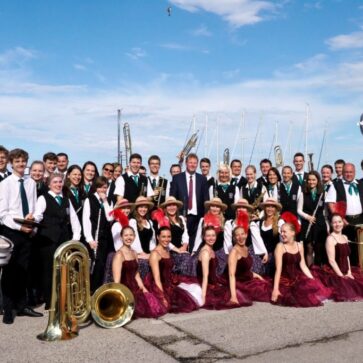

Riga Technical University Students’ Wind Band SPO was founded on 5 March 1969 in Riga. Between 1969 and 1990, the band was led by its founder and Chief Conductor Hermanis Eglitis. The band has had its dance group since 1987. Janis Purins conducted the orchestra between 1990 and 1992, but Maris Martinsons assumed the role of Artistic Director in 1992. Dainis Cimermanis has been working as the Second Conductor of the band since 2003 and Gita Udre assumed leadership of the dance group in 1994.
The orchestra aims to grow and develop to strive for the highest results in competitions in Latvia and abroad by performing high quality music to its audiences and creating an attractive creative environment.
The members of SPO are lively, cheerful and enthusiastic. They include students and young people from various universities in Latvia, as well as veterans who have kept the spirit of students.
Every year, SPO takes part in various celebrations, festivals, parades and events hosted by the state and the local government. The band has received awards from various international competitions in Germany, Switzerland, Italy, the Netherlands and has successfully participated in festivals in Russia, Ukraine, Finland, Hungary, France, Luxembourg and Greece.
SPO has made several recordings at the Latvian Radio and Latvian Television, including two vinyl records and a CD released in 2008.
The band plays a wide range of compositions from traditional marches and medleys of student songs to classical arrangements, as well as originals by composers from Latvia and abroad. The repertoire is selected for each concert specifically. Originals by European composers and arrangements of baroque and classical music are generally featured in large concerts and competitions, while arrangements of jazz, popular and other genres of light music are mainly played at street concerts. Pieces by Latvian composers and folk music, enhanced by Gita Udre’s dance group, have become especially popular.[:it]
La Wind Band SPO degli Studenti dell’Università di Riga è stata fondata il 5 marzo 1969 a Riga. Tra il 1969 e il 1990, la band fu guidata dal suo fondatore e direttore principale Hermanis Eglitis. La band ha il proprio gruppo di danza dal 1987. Janis Purins ha diretto l’orchestra tra il 1990 e il 1992, ma Maris Martinsons ha assunto il ruolo di direttore artistico nel 1992. Dainis Cimermanis ha lavorato come seconda conduttrice della banda dal 2003 e Gita Udre ha assunto la leadership del gruppo di ballo nel 1994.
L’obiettivo dell’orchestra è quello di crescere e svilupparsi per aspirare ai risultati più alti nelle competizioni in Lettonia e all’estero, eseguendo musica di alta qualità per il suo pubblico e creando un ambiente creativo e d’attrattiva.
I membri della SPO sono vivaci, allegri ed entusiasti. Includono studenti e giovani di varie università in Lettonia, oltre a veterani che hanno mantenuto lo spirito da studenti.
Ogni anno, SPO partecipa a varie celebrazioni, festival, sfilate ed eventi ospitati dallo stato e dal governo locale. La band ha ricevuto premi da vari concorsi internazionali in Germania, Svizzera, Italia, Paesi Bassi e ha partecipato con successo a festival in Russia, Ucraina, Finlandia, Ungheria, Francia, Lussemburgo e Grecia.
SPO ha realizzato diverse registrazioni presso la radio lettone e la televisione lettone, tra cui due dischi in vinile e un CD pubblicato nel 2008.
La banda suona una vasta gamma di composizioni: da marce tradizionali e medley di canzoni per studenti fino a arrangiamenti classici, così come quelli originali di compositori lettoni e stranieri.
Il repertorio è selezionato appositamente per ogni concerto. Gli originali dei compositori europei e gli arrangiamenti di musica barocca e classica sono generalmente presenti in grandi concerti e concorsi, mentre gli arrangiamenti di musica jazz, popolare e di altri generi di musica leggera sono principalmente riprodotti durante i concerti di strada. Pezzi di compositori lettoni e di musica popolare, arricchiti dal gruppo di danza di Gita Udre, sono diventati particolarmente popolari.